
Google has quietly changed how it reads the hidden code that puts star ratings, prices and FAQ dropdowns under your search listing. If that code carries a small formatting fault, Google no longer patches it for you. It simply ignores the affected part. The visible result for a local business is blunt: your review stars can disappear from search, and nothing on your website will look broken.
This is not a ranking penalty and it is not an algorithm update. It is a change to how Google’s crawler interprets structured data, confirmed by Google on 21 August 2026. The exposure is real, the fix is cheap, and most business owners will never know it happened unless someone checks.
Key takeaways
- Google now applies only a single pass of unescaping when it reads structured data, so a double-escaped character can break the rich result instead of being auto-corrected.
- The most visible casualty is your Google star ratings, which give searchers useful proof that a plain blue link cannot.
- Most WordPress sites generate this code automatically through an SEO plugin, so the fault can appear without you touching a thing.
- You do not fix this by hand-editing your site. You get it checked, then corrected at the source.
What actually changed
Structured data is the behind-the-scenes code that tells Google what a page contains: this is a business, this is its rating, these are the questions it answers. Google reads it to build the richer listings you see in results, the ones with stars, prices and expandable questions.
In Google’s own words, posted publicly on 21 August 2026: “To bring our parser up to JSON and other standards, we changed our JSON-LD extraction and are now only applying a single pass of HTML unescaping.” Google added that “double-escaped entities (like & or ✔) will no longer be unrolled.” Gary Illyes of Google confirmed the correct approach is defined in the JSON standard, RFC 8259.
Translated out of the jargon: certain characters have to be written a specific way in the code. Google used to tolerate a common mistake and quietly correct it. It has stopped. If your site makes that mistake, the affected result now fails silently.
A plain example from a Perth trade business
Say you run Smith & Sons Plumbing. Your business name has an ampersand in it, and an ampersand is one of those characters that has to be encoded carefully in the hidden code.
When it is written correctly, the code holds your name cleanly and Google reads it. When a plugin or template gets it wrong, the name is “double-escaped”, encoded twice over, so the code contains a garbled version instead of a clean one:
Correct:  "name": "Smith & Sons Plumbing"
Broken:   "name": "Smith & Sons Plumbing"
Until this change, Google could look at the broken version, work out what you meant, and still read the listing. Now it no longer performs that second correction. If the malformed value prevents the review data from parsing correctly, the star rating can stop showing. The page itself looks completely normal to you and to your customers. The only visible difference is in Google, where the stars are gone.
That is the whole risk in one picture. A single mis-encoded character, generated automatically, costing you the trust signal you earned one honest review at a time.
Why this matters more for a local service business
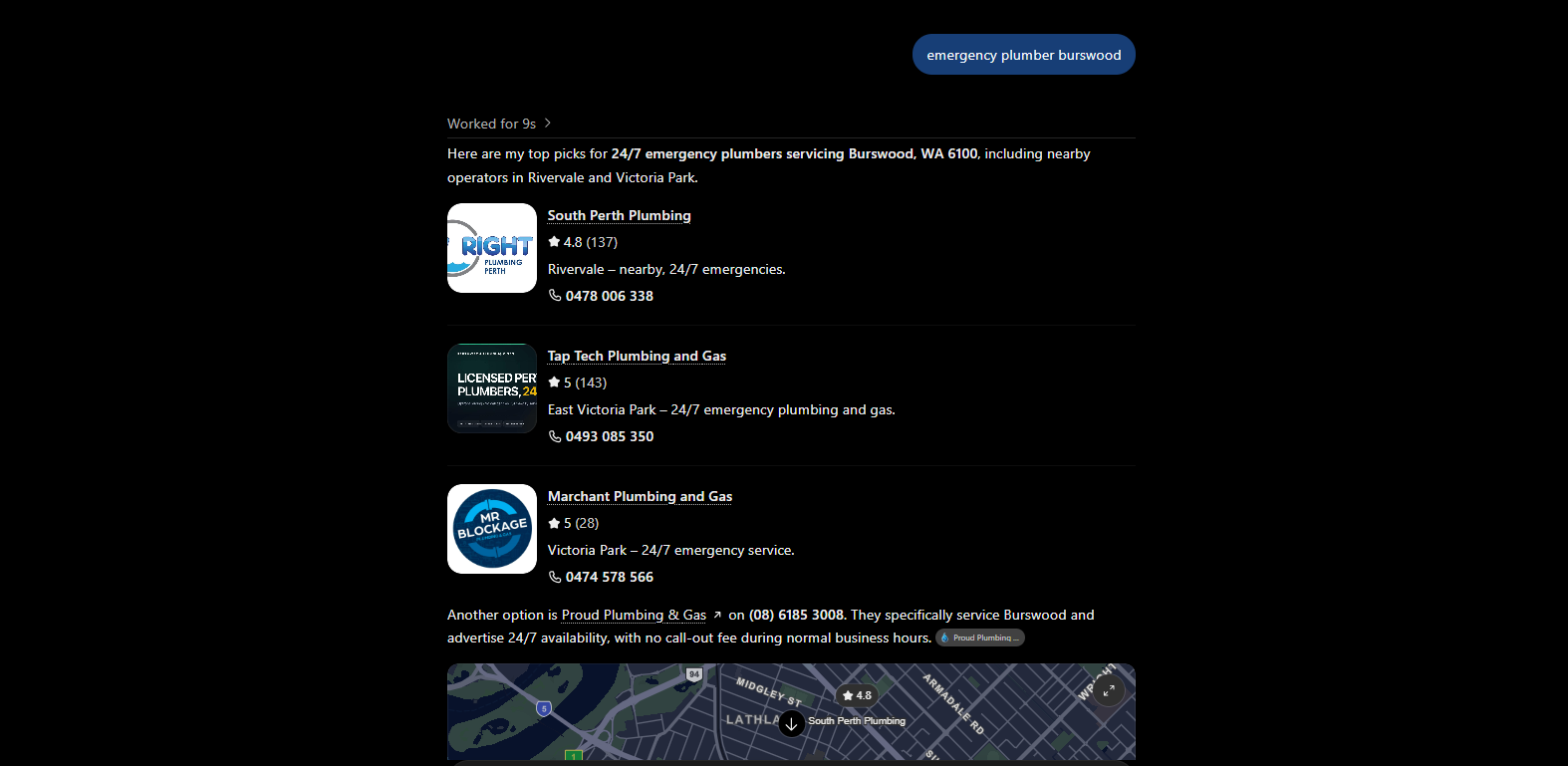
Star ratings, prices and FAQ dropdowns stand out from a plain listing. For a plumber, an electrician or an air-con installer, those stars under your name are hard-won proof, shown to every searcher for free. They can be the reason a customer picks you over the business listed above you.
Lose them and you rarely get a clean signal that anything is wrong. Your rankings can hold. Your traffic drifts. Your phone rings a little less. By the time anyone connects the dots, weeks have passed. This is the kind of fault that hides in plain sight precisely because the website still works.
How to check, without touching your code
You do not need to understand the code to find out if you are exposed. You need someone to run the check and read the result. The steps are simple and safe:
- Run your key pages through Google’s Rich Results Test. It reads your live schema the way Google does and flags what is failing.
- If your review or business schema shows errors or warnings, treat that as your answer: the fault is live.
- Have it corrected at the source, in the plugin or template that generates the code, not by hand-editing individual pages. A source fix holds; a page-by-page patch does not.
- Re-test after the fix and confirm the rich result is eligible again.
If you would rather not do this yourself, this is exactly the sort of quiet, technical check that sits inside ongoing Perth SEO services and website maintenance. It is a five-minute look that can save a trust signal you spent years building.
The bottom line
Google reads your structured data more strictly than it used to. A tiny, automatically generated coding fault can now wipe your star ratings from search while your website looks perfectly fine. It is not a penalty and it is not a rankings problem. It is a silent eligibility fault with a cheap fix, and the only real risk is not knowing to check.
Your website can be working and quietly failing at the same time. When did you last look at what Google actually sees?
Frequently asked questions
Will this hurt my Google rankings?
No. This change affects rich-result eligibility, the stars, prices and FAQs shown in your listing, not where you rank. Your position can stay the same while the visual extras that earn clicks disappear.
How do I know if my site is affected?
Run your important pages through Google’s Rich Results Test. If your review or business schema reports errors or warnings, the fault is live and worth fixing. If it passes cleanly, you are fine.
Can I just fix the code myself?
It is not recommended. The fault usually comes from an SEO plugin or template generating the code automatically, so the fix belongs at that source. Hand-editing individual pages tends to be overwritten the next time the code regenerates.
When did this take effect?
Google confirmed the change publicly on 21 August 2026. Google did not publish a separate rollout window, so treat the confirmation date as the point from which to check.
Sources
- Google Search Central, JSON-LD extraction update, confirmed 21 August 2026, retrieved 24 August 2026.
- Gary Illyes, RFC 8259 escaping clarification, retrieved 24 August 2026.
- Search Engine Roundtable, reporting and context, 21 August 2026, retrieved 24 August 2026.