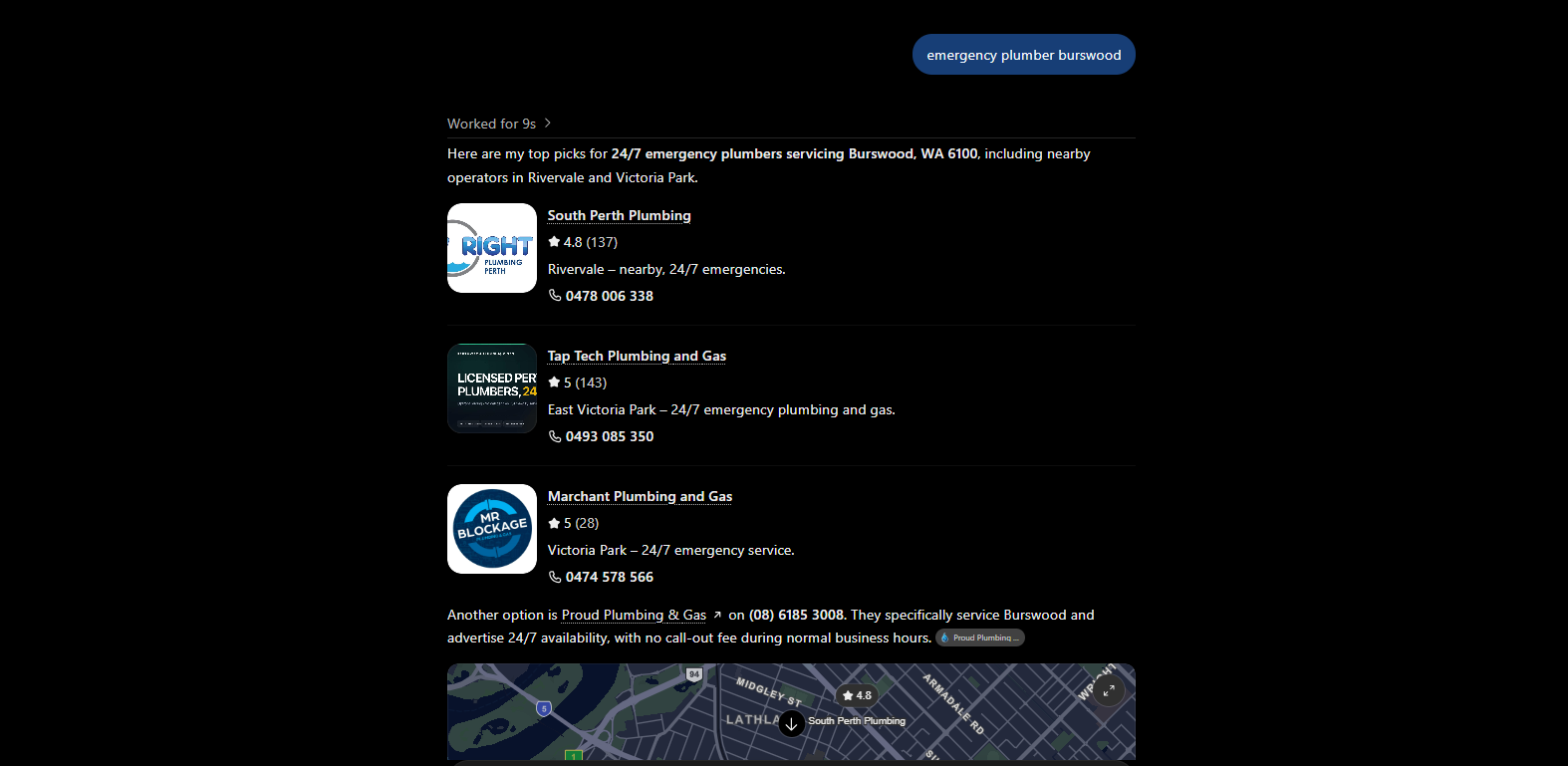
Your customer still gets their answer. They just get it from the AI box at the top of Google, before they scroll to your website. Until recently you had no honest way to know whether your business was even in that answer. Now you do.
As of 31 August 2026, Google finished rolling out its generative AI performance reports in Search Console to every website worldwide. It is free, it is probably already sitting in the account your web person set up, and most owners have no idea it exists. Google also added a switch to opt out of AI search, and that one is a trap for anyone who clicks it for the wrong reason.
By the end of this article you will know where to find the report, what it does and does not tell you, how to read it, and why opting out is almost always the wrong move.
Key takeaways
- Google Search Console now has a free report showing where your site appears inside AI Overviews, AI Mode and AI features in Discover. It rolled out worldwide on 31 August 2026.
- It measures impressions only. It shows where you appear, not how many calls or sales it drove. There is no click data in it as of publication.
- The new opt-out switch removes you from those AI answers for zero ranking benefit. It does not protect your content and does not touch AI training, which is a separate control.
What is the new Search Console AI report?
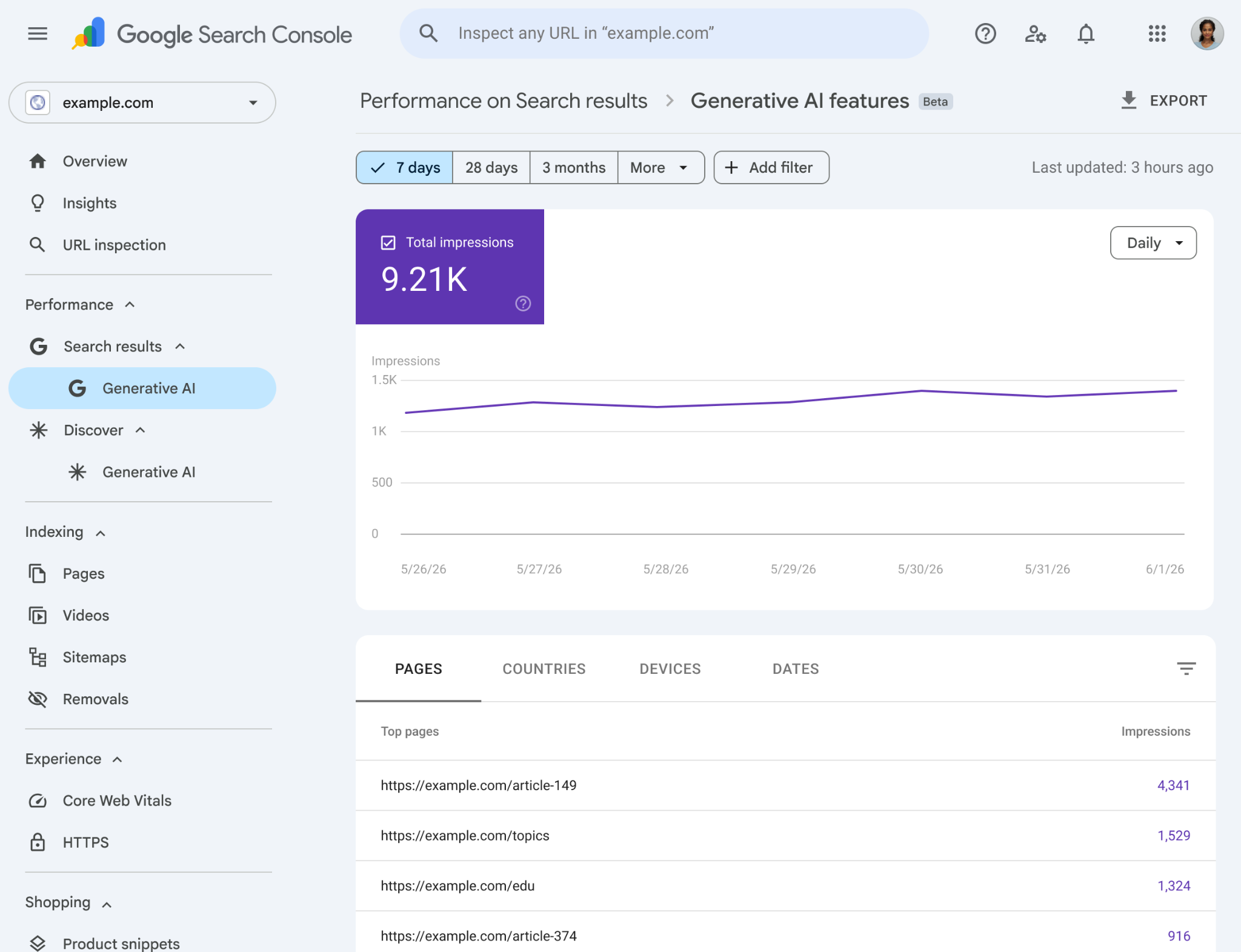
It is a dedicated view inside Google Search Console that shows how often your pages appeared in Google’s AI-powered answers. Google announced the reports in June 2026 and, in a note added to that same post, confirmed the global rollout: “As of August 31, 2026, we’ve rolled out these insights to all websites worldwide.” It is the first built-in, honest look at whether Google’s AI is putting your business in front of people, and if someone set up Search Console for your website, it is likely already there waiting.
One caveat up front. Google says the rollout is complete, but its own help pages still note that some properties do not have access yet, and that sites with too few AI impressions might not see a report at all. So if you look and find nothing, that does not automatically mean you are invisible. It can simply mean your account has not caught up.
Where do you find it, and what does it show?
The report lives in the Performance section of Search Console, in a view dedicated to generative AI, with a separate report for Search and for Discover.
Once you are in, it breaks your visibility down across a few dimensions:
- Impressions: how often your URLs appeared in generative AI features.
- Pages: which specific URLs turned up in those answers.
- Countries: where you appeared, so you can confirm your visibility is landing in the right market.
- Devices: which devices people were using when your site showed up (available in the Search report).
- Dates: performance over time, down to hourly, daily, weekly and monthly.
Here is the part most owners miss. The report shows impressions. It does not show clicks, traffic, conversions or revenue, and as of publication there is no click data in it at all. So it will tell you your services page appeared in AI answers 400 times last month. It will not tell you how many of those became a phone call. Treat it as a visibility checklist, not a sales report.
How would you actually read it? A worked example
Say you run a blocked drains plumbing business in Perth. This is a hypothetical, purely to show how the report reads in practice, not real data.
You open the report and see that over the last month your general “blocked drains” explainer page appeared in AI answers 400 times, while your Joondalup and Fremantle suburb service pages barely registered. Your booking and quote pages are nowhere in it.
Read honestly, that tells you two things. Google’s AI already sees you as a useful source for the general question, which is good for recognition. But the pages that actually win you work, the suburb service pages and the quote path, are invisible in AI answers. That is the gap. In a client review, this is exactly where we would shift effort toward the money pages, structuring them so an AI can quote them cleanly, rather than pouring more into an explainer that is already doing its job.
That is the real value of the report. It is not a scoreboard to admire. It is a map of which pages are already earning AI visibility and which ones you rely on for enquiries but are being left out. For the wider picture on what AI Overviews are doing to clicks for Perth businesses, the pattern holds: being in the answer and earning the visit are two different jobs.
What is the opt-out switch, and should you use it?
Alongside the reports, Google launched a Search generative AI control, a property-specific setting in the Settings area of Search Console that excludes your site’s links and content from the same AI surfaces the report measures.
For almost every local service business, clicking it is a mistake, and Google’s own statements explain why. Sites that opt out get no traffic and no impressions from those AI features. You simply disappear from the answer. In return you get nothing: Google confirms the setting is not used as a ranking signal anywhere else in Search, so opting out does not help your normal rankings.
It is also widely misunderstood as a way to protect your content or stop Google training on it. It does neither. AI training is governed by a separate control called Google-Extended, and the opt-out does not touch it. All it does is make you vanish from AI answers for no upside.
What should a WA business owner do with this?
Start by looking. Open Search Console, find the generative AI report, and see whether your business appears at all. That single check tells you more than any headline about AI killing search.
Then read it against the right question: are the pages that actually win you work showing up, or only your general explainers? If your quote, service and suburb pages are missing, that is your priority. This is the practical work behind optimising your website for AI search, and it is where most local sites leave easy ground on the table. And leave the opt-out switch alone.
Frequently asked questions
Does the Search Console AI report show how much traffic I get from AI?
No. It shows impressions only, meaning how often your pages appeared in AI answers. There is no click, traffic, conversion or revenue data in it as of publication. Read it as a visibility checklist, not a sales report.
I looked and there is no report. Does that mean I am invisible in AI?
Not necessarily. Google says the rollout is complete, but its help pages still note that some properties do not have access yet, and that sites with too few AI impressions may not see a report. An empty report can mean your account has not caught up rather than that you have no visibility.
Should I opt out of AI search to protect my content?
No. Opting out removes your site from AI answers with no ranking benefit, and it does not protect your content or stop AI training. Training is governed separately by Google-Extended. For a local service business, opting out almost always costs you visibility for nothing in return.
If you want to know which of your pages are already earning AI visibility and which of your money pages are being left out, that is the audit we start with. You can see how we approach SEO for Perth businesses if you would like a hand reading your own report.
So here is the question worth sitting with. Google will now tell you, for free, whether your business is showing up in the answers your customers are reading. Have you actually looked yet?
Sources
- Google Search Central Blog (Hillel Maoz and Moshe Samet), “Introducing Search Generative AI performance reports in Search Console”, including the note “As of August 31, 2026, we’ve rolled out these insights to all websites worldwide”, retrieved 2026-09-07, https://developers.google.com/search/blog/2026/06/gen-ai-performance-reports
- Google Search Console Help, “Search generative AI control” (opt-out is not a ranking signal and does not affect AI training, which stays with Google-Extended), retrieved 2026-09-07, https://support.google.com/webmasters/answer/16908024
- Matt G. Southern, “Google Search Console AI Reports Rolled Out Worldwide”, Search Engine Journal, 5 September 2026 (context only, not the authority), retrieved 2026-09-07, https://www.searchenginejournal.com/google-search-console-ai-reports-rolled-out-worldwide/587836/