You are still ranking. Your traffic report says something different. Impressions look fine, maybe even up, but the clicks have gone quiet. That is not always a ranking problem. Increasingly, it is a Google problem, and its name is the AI Overview.
Google now answers a lot of questions before anyone reaches your website. The searcher gets what they came for on the results page itself. For a Perth service business that relies on being found, that changes the maths of every article, service page and “near me” search you have ever tried to win.
By the end of this piece you will know what an AI Overview actually is, how it differs from AI Mode and old-fashioned blue links, why a citation is not the same as a visit, and the three moves that protect your visibility while everyone else argues about whether the sky is falling.
Key takeaways
- In 2026, iPullRank found 46.96% of Google searches end without a click, and 64% of Australian mobile searches end the same way.
- External sites make up the majority of what AI engines cite, between 69.6% and 82.3% in one 2026 analysis, so an owned-page-only plan is not enough.
- A citation and a visit are different currencies. Build pages the AI answer cannot finish for you.
What is a Google AI Overview, and why should Perth businesses care?
In 2026, external domains made up between 69.6% and 82.3% of the sources Google AI Mode, Gemini and ChatGPT cited across SaaS, ecommerce and finance (Aleyda Solis, AI search citations analysis using Semrush Enterprise data, August 2026). Your own site is the minority of what feeds an AI answer, and that is the shift Perth businesses keep missing.
A Google AI Overview is an AI-generated summary that sits at the top of some search results and answers the query directly by pulling from several web pages at once. It cites its sources with links, but the searcher often has their answer before they scroll, let alone click. It is a summary layer bolted on top of the old results page.
Here is why that matters for you. If a customer searches “how often should you service a split system” and Google writes the answer on the page, the blog you wrote to win that search still did its job. It informed the answer. It just did not earn the visit. The value moved, and most owners have not adjusted how they measure it. For the fuller picture on what content still works in AI search, the pattern is consistent: thin explainers get absorbed, useful and proof-heavy pages survive.
AI Overview, AI Mode, or blue links: what is the difference?
In 2026, AI-cited sources were dominated by external domains, 69.6% to 82.3% across three verticals (Aleyda Solis, August 2026). That single fact explains why you cannot treat AI Overviews, AI Mode and blue links as one channel. Each one exposes your business in a different way, and lumping them together hides exactly where you are losing ground.
The three surfaces behave differently, so it helps to see them side by side.
| Surface | What the user sees | How you appear | Likelihood of a visit |
|---|---|---|---|
| AI Overview | A written summary at the top of normal results | A cited link inside or beside the summary | Lower. The answer is often complete on the page |
| AI Mode | A full conversational search you can question and refine | A cited source within a longer, evolving answer | Lower again. The conversation replaces browsing |
| Blue links | The classic ranked list of ten results | A ranked listing with your title and description | Higher. A click is the whole point of the format |
Blue links reward the ranking. AI Overviews and AI Mode reward being useful and quotable enough to get named in the answer. If you only measure clicks, you will conclude your SEO is failing when it may simply be feeding a surface you are not counting. The fix starts with knowing how to optimise your website for AI search rather than for the blue-link era alone.
Is a citation worth as much as a visit?
In 2026, iPullRank found that roughly 86% of the clicks that still happen are discovery clicks rather than branded navigation (iPullRank, zero-click behaviour analysis, July 2026). So a citation and a visit are not the same currency. A citation puts your name inside the answer. A visit puts a real person on your page, ready to enquire.
Both have value, but they do different work. A citation builds recognition and trust at the moment someone is forming an opinion. If Google’s summary names your business as the source on “commercial cleaning frequency in Perth”, you are the authority in that reader’s head, even without a click. That is brand equity earned inside the search itself.
A visit is where the money lives. Quotes, bookings, phone calls and form fills all need a person on your site. The trap is assuming one replaces the other. It does not. You want to be cited for the questions people research, and visited for the pages where they decide and act. Measuring only clicks undervalues the first job. Measuring only impressions ignores the second. You need both numbers in the same report, read together.
How exposed is your website right now?
In 2026, SparkToro put zero-click search at roughly 60%, Similarweb at about 37%, and iPullRank’s larger sample at 46.96% (iPullRank, zero-click behaviour analysis, July 2026). The exact figure moves with the method, but every credible source agrees on the direction: more searches are ending without a click, not fewer.
Your exposure depends on the kind of content you rely on. If most of your traffic comes from short informational questions, the ones an AI Overview can answer in two lines, you are heavily exposed. If your traffic comes from pages that require a visit to act on, a quote form, live availability, a job gallery, suburb-specific service detail, you are far better protected.
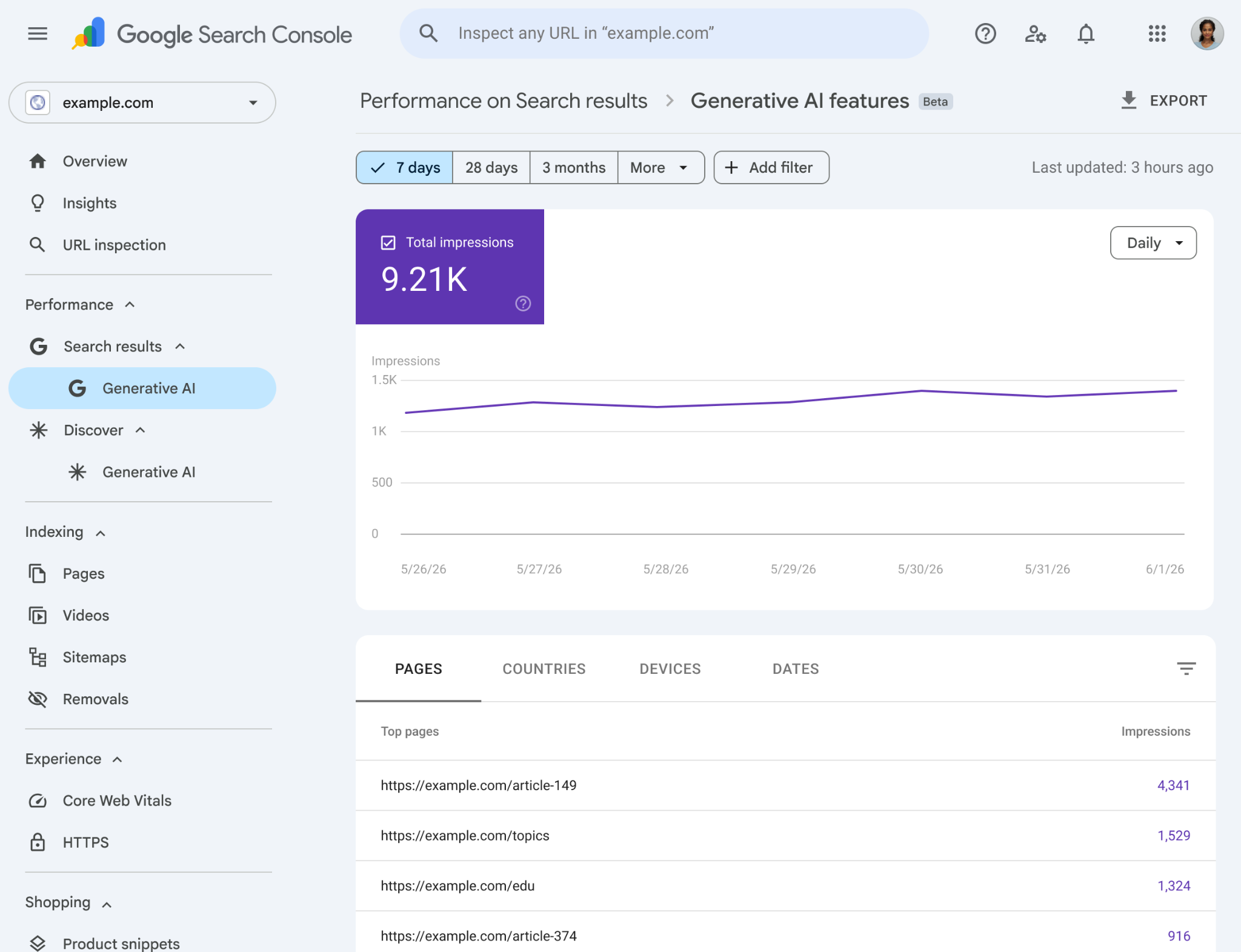
The Grout Guy, a national tile and grout restoration franchise, rebuilt their site architecture with OO in late 2025: three-tier location clusters, schema markup, hundreds of cross-linked suburb service pages. Over the following six months, Google Search Console impressions grew from 318,002 to 850,222, up 167%. Clicks held at approximately 20,000. The site earned significantly more search exposure but not proportionally more clicks. The suburb service pages and quote paths continued to convert because they require the visitor to act. Impressions rising while clicks plateau is one pattern worth monitoring in your own Search Console. It does not always mean zero-click behaviour is the cause, expanded indexation can produce the same shape, but it is the right question to ask.
The honest test is simple. Open your top ten landing pages. For each one ask: could Google answer this query fully on the results page? If yes, that page is at risk. If the reader still needs to reach you to get value, that page is doing work AI cannot finish. That single audit tells you more than any panic headline about the death of search.
What three moves protect your visibility?
In 2026, Aleyda Solis analysed 40 leading sites and found the pages that earn AI citations are rarely the same pages that earn AI referral clicks (Aleyda Solis, content prioritisation framework, August 2026). Protecting your visibility means building for both jobs on purpose, not hoping one page does everything.
Three moves matter more than the rest.
One: build pages the AI answer cannot close. Booking and quote pages, live pricing, real job galleries, verifiable reviews and first-hand “how we did this job” content all need a visit to deliver. An AI Overview can summarise a definition. It cannot show your last twenty jobs in Joondalup or take a booking. Weight your effort toward pages that force the click because the value only exists on your site.
Two: make your facts extractable and quotable. If you want to be the cited source, structure your content so an AI can lift a clean, accurate answer. Clear questions as headings. Direct answers in the first line of each section. Specific numbers, named and sourced. This is the practical side of how to structure your website for generative search, and it is where most local sites leave easy ground on the table.
Three: fund your presence off your own site. Since external domains make up the majority of what AI engines cite, your reviews, directory listings, community mentions and press all feed the answer too. An owned-page-only strategy under-serves AI search. Being named and reviewed across the wider web is now part of being visible, not a nice-to-have.
What does this mean for WA service businesses specifically?
In 2026, 64% of Australian mobile searches ended without a click, with mobile running about 15 points higher on zero-click than desktop (iPullRank, zero-click behaviour analysis, July 2026). WA service buyers search “near me” on their phones, so a large share of your local demand now resolves inside the results page and never reaches a website at all.
That reframes what you should invest in. When someone in Rockingham searches “emergency electrician near me” on their phone, the map pack, your Google Business Profile and the AI summary often settle the decision before any blue link is clicked. Your review count, your profile completeness and being the named business in the local pack now carry more weight than raw click-through from position four.
None of that means blogging is dead. It means the job of the blog has changed. It builds the authority and the citations that make you the obvious choice when the mobile searcher does act. Trades feel this first and hardest, which is why we mapped out how AI search impacts trades businesses in its own guide. The WA lesson is blunt: win the local surface, then let content earn the trust that closes the job.
Frequently asked questions
Are AI Overviews killing my SEO?
Not killing it, changing what it measures. In 2026, iPullRank found 46.96% of Google searches end without a click (iPullRank, July 2026). Your rankings can hold while clicks fall because the answer now often appears on the results page. Judge SEO on citations and visits together, not clicks alone.
Should I stop writing blog content?
No, but change its job. In 2026, Aleyda Solis found citation pages and click pages are rarely the same pages (Aleyda Solis, August 2026). Keep content that earns trust and citations, and cut thin explainers an AI answers in one line. Write for authority, then let action pages capture the visit.
How do I get cited in an AI Overview?
Be accurate, specific and easy to extract. External domains made up 69.6% to 82.3% of AI citations in one 2026 analysis (Aleyda Solis, August 2026), so your reviews and off-site presence matter too. Use clear question headings, answer directly, cite real numbers, and earn mentions across the wider web.
What matters most for a WA local business?
Your local surface. In 2026, 64% of Australian mobile searches ended without a click (iPullRank, July 2026), and WA “near me” demand skews to mobile. Prioritise Google Business Profile completeness, review volume and local-pack presence, then support it with content that makes you the obvious, trusted choice.
If your clicks have gone flat while your impressions have not, it is worth understanding exactly which of your pages are exposed and which are safe. That is the audit we start with, and it is the difference between reacting to headlines and knowing your own numbers.
So here is the question worth sitting with. If Google is already answering your customers’ questions for you, what is left on your website that they still have to come to you for? Whatever that is, that is your business now. Is yours built around it yet?
Sources
- Aleyda Solis, “AI Search Is a 3rd-Party Citation Problem With an On-Page Corroboration Base”, retrieved 2026-08-11, https://www.aleydasolis.com/en/ai-search/ai-search-citations/
- iPullRank (Cate Dombrowski), “What 13 Billion Google Searches Reveal About Zero-Click Behavior”, retrieved 2026-08-11, https://ipullrank.com/zero-click-behavior-analysis-q3-2026
- Aleyda Solis, “Content Prioritization in an AI Search Era: A Framework + Worksheet”, retrieved 2026-08-11, https://www.aleydasolis.com/en/ai-search/content-prioritization-ai-search/