
You’re paying for blog posts that AI can finish before your customer reaches your website. That’s not a blogging problem. It’s a content-choice problem.
Simple explainers still have a place, but fewer deserve their own page. If Google or ChatGPT can settle the question in one tidy paragraph, your customer has little reason to click. The better investment is content built from proof, current detail, local knowledge or a useful next step.
Blogging still works. The type of blog that works has narrowed.
AI did not kill blogging. It exposed the filler
The old advice was easy: publish helpful articles around common questions and wait for search traffic. That worked while the search result mainly pointed people towards answers. AI search often gives them the answer on the spot.
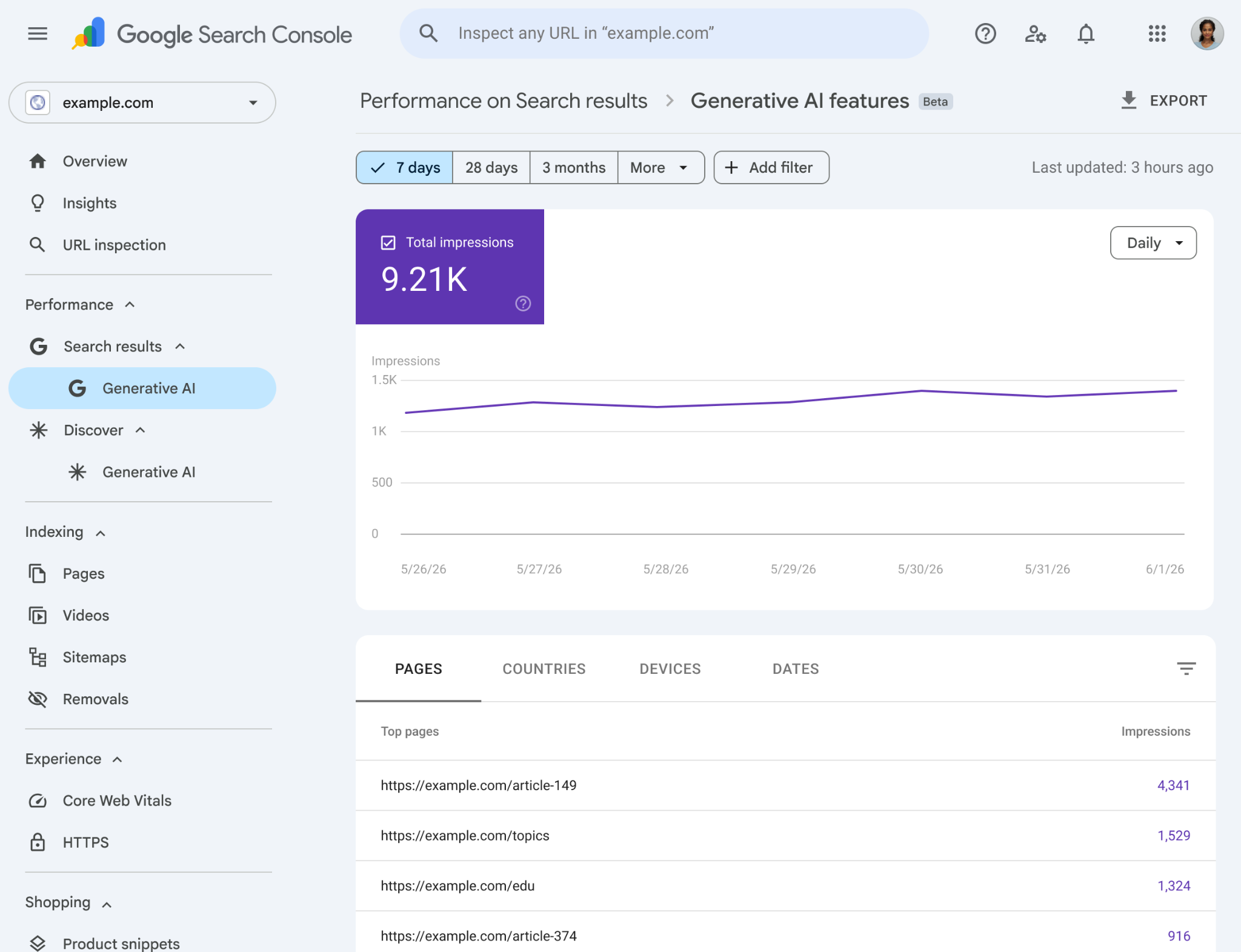
Aleyda Solis drew a useful distinction in her August 2026 analysis, Content Prioritization in an AI Search Era. Looking at 40 leading websites across four verticals, she found that AI referrals were only a fraction of organic search referrals. She also found that pages cited in AI answers and pages visited from those answers often did different jobs.
That matters because a citation and a visit are not the same win. A well-sourced research page might be quoted without earning much traffic. A pricing, booking or service page might earn a valuable visit because the customer still needs to check details or act.
Your content plan should account for both. More importantly, it should connect each article to a real business outcome rather than treating traffic as the outcome.
Use one decision rule before you approve another topic
If AI can give a complete, reliable answer without anything unique from your business, do not build a standalone article around it.
Build the article when the answer depends on something only you can provide: first-hand evidence, current service information, local context, professional judgement or a next step that must happen on your website.
Solis’ framework considers click resilience, citation potential, brand mention potential, business value, proprietary advantage and effort. For a WA local service business, you can turn that into a simpler test:
- Does the reader still need to visit to verify the answer or take action?
- Does the page contain proof a competitor cannot copy?
- Does the answer change because the customer is in Perth or regional WA?
- Does the topic lead naturally to a service you provide?
- Can you keep the information accurate?
One weak answer does not kill the idea. Five weak answers probably should. Your blog does not need another passenger.
Write this, not that: a Perth trades example
Imagine a Perth electrical or plumbing business choosing next month’s topics. Here is how the decision changes once every article needs a reason to be visited.
| Deprioritise | Prioritise | Why the stronger topic survives |
|---|---|---|
| What is a circuit breaker? | What a switchboard upgrade costs in Perth, and what changes the price | Local specificity and current detail. A useful answer needs real price factors, property conditions and scope boundaries. |
| What does a plumber do? | How we fixed recurring blocked drains in a 1970s Fremantle home | Proprietary proof. Job photos, the diagnosis, the fix and the result cannot be produced from generic web knowledge. |
| What is an emergency electrician? | Emergency electrician callouts: what to check before you ring and our actual response times | Click resilience. The reader needs safe, practical guidance and live service information before taking the next step. |
The stronger versions are not longer rewrites of the same topic. They do a different job. They reduce uncertainty, show what competent work looks like and help the customer decide what to do next.
This is especially important for trades, where the details of the property, suburb, access and previous work can change the answer. We have covered that wider shift in how AI search affects trades businesses.
What content is still worth the budget?
Four types of articles continue to give local service customers a reason to visit.
Real job stories with the receipts
Show the starting problem, what you found, what you did and what changed. Use real photos where permission allows. Include the property type, suburb, constraints and trade-offs. A polished claim says you are experienced. A documented job lets the reader see it.
Current cost and decision guides
Explain the factors that change a price instead of posting a number you cannot stand behind. Give useful ranges only when you have verified data and enough context. Tell the reader what is usually included, what creates extra work and what information helps you quote properly.
Local guides where location changes the answer
A Perth page should contain more than the word “Perth”. Soil, housing age, council requirements, climate, travel area and local availability can all change the advice. Use the details that actually affect the job. Decorative suburb names fool nobody, including Google.
Pre-service guidance that leads to a real next step
Help customers understand what to observe, what information to gather and when to call a professional. Keep safety boundaries clear. The goal is not to turn the reader into a weekend electrician. It is to make the next conversation faster, safer and better informed.
These articles also work better as part of a connected system. A practical guide can lead to a service page, a case study and a booking step. Our guide to preparing your website for AI search explains how that wider structure helps search engines understand and reference a business.
Run the Monday-morning test
Take your next ten blog ideas and remove your business name. If a competitor could publish the same article with no meaningful changes, the idea is too generic.
Then ask what would make the page impossible to copy. It might be a job record, an expert’s judgement, a live price factor, original photos, a local limitation or a clear action the customer can complete. Add that value before writing, not as decoration after the draft is finished.
If a basic question still matters, answer it inside the relevant service page or a stronger guide. Not every keyword needs a URL. Sometimes the most strategic content decision is declining to create more content.
Blog less. Give people more reason to visit.
The answer is not to abandon blogging. It is to stop paying for articles that repeat public information and hope word count will save them.
Choose topics that carry proof, local relevance, current detail or a useful next step. Build fewer pages, make each one harder to replace, and connect it to the customer’s decision.
If you are reviewing your content plan, start with the articles AI can already answer without you. Then use our content-first SEO guide to build the stronger pages around what your business genuinely knows.
The question is not whether blogging still works. It is whether your next article gives anyone, human or machine, a reason to choose your business. What will you stop writing on Monday?
Source
Aleyda Solis, “Content Prioritization in an AI Search Era: A Framework + Worksheet”, published 6 August 2026, retrieved 10 August 2026.