
Create content AI can’t finish for you. If you are investing in blog posts that AI can finish before your customer clicks through to your site, you have a problem.
The answer appears in the search result. It is neat, plausible and complete enough. Your potential customer reads it, gets what they need and never visits your site. You still invested in the article, of course. The searcher and potential customer, however, remains admirably click-resistant.
That does not mean useful content is dead. It means generic topics have become expensive passengers. The fix is to choose subjects that still require a visit because the reader needs proof, local detail, a live answer or a next step. This five-question checklist will help you make that choice before another thin article eats the budget. For the broader strategy behind it, start with our pillar guide to what content still works in AI search.
Why most blog topics no longer earn a click
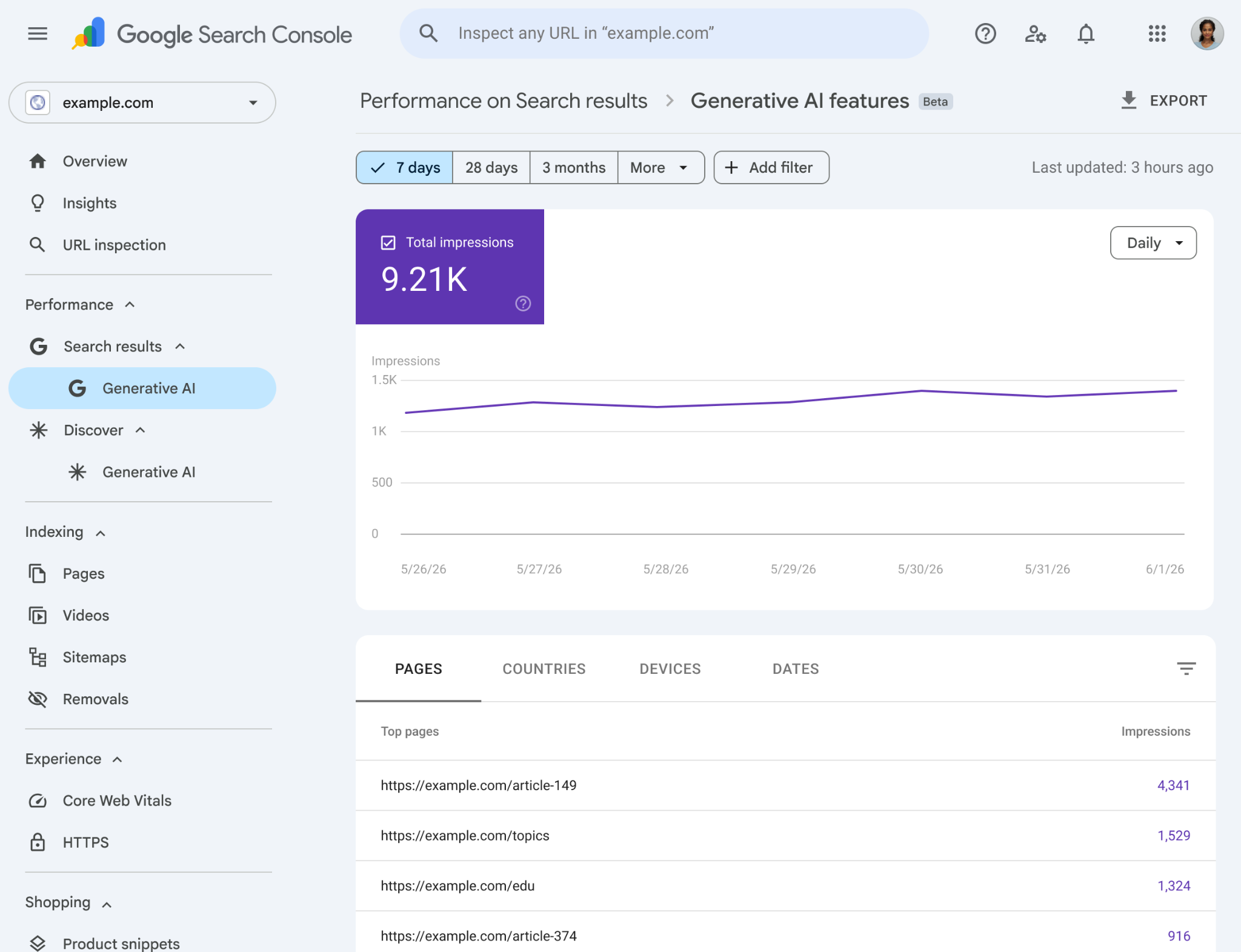
Search has always tried to answer questions quickly. AI makes the answer box far more capable, so basic definitions and tidy summaries often end inside the search experience. In its 2026 zero-click analysis, iPullRank reported that 46.96% of Google searches in its panel ended without a click. For Australian mobile searches, its directional figure was 64%.
Those numbers do not mean 64% of your potential customers have vanished. The study uses a single proprietary panel, and its headline sample was heavily weighted towards desktop. The useful lesson is simpler: a page cannot rely on the old assumption that an informational query naturally produces a website visit.
Local businesses feel this sharply. A customer can see a map result, opening information, reviews and a short answer without touching a blue link. A generic post called “What is a dental check-up?” has little left to do once an AI response has explained the basics.
This is also why your site cannot carry the whole job alone. Aleyda Solis found that external domains accounted for 69.6% to 82.3% of cited sources across three verticals in her 2026 analysis. That range is directional, based on 15 leading brands and one data provider. It is not a benchmark for a Perth business. It does suggest that reviews, publishers, communities and other third parties help corroborate what your owned pages claim.
The answer is not to stop writing. It is to stop publishing pages whose entire value can be lifted into two paragraphs. This shift is especially clear for trade businesses, as explained in our guide to how AI search affects trades businesses, but the test applies just as firmly to dentists, accountants, clinics and professional services.
The five-question content-choice checklist
Aleyda Solis’s content-prioritisation framework separates click resilience, citation potential, brand mention potential, business value, proprietary advantage and production effort. The checklist below adapts that logic for a local business deciding whether one article deserves time and money.
If AI can give a complete, reliable answer without anything unique from your business, do not build a standalone article around it.
- Does the reader still need to visit to verify or act?A worthwhile topic leaves a useful job unfinished. The reader may need to inspect before-and-after photos, check current availability, compare treatment options, download a form, request a quote or book. If the answer ends with a definition, there is probably no remaining reason to visit.Ask what the person can only do on your page. If the honest answer is “read a longer version”, the topic fails.
- Does the page hold proof a competitor cannot copy? Your process, job photos, observations, documented results, customer questions and service records belong to you. A competitor can copy a heading such as “How to choose a dentist” by lunchtime. They cannot honestly copy the evidence from a difficult case, the reasoning behind a recommendation or a photo sequence from work your team completed.This is where owned content earns both trust and citation potential. The page gives search systems a clear fact base while third-party reviews and mentions provide corroboration.
- Does the answer change because the customer is in Perth or regional WA? Local detail should change the advice, not decorate it. A suburb name added to a generic article is not local knowledge. Useful location content addresses a real difference in access, travel, service area, timing, environment or customer decision.For example, a regional patient considering a multi-visit dental treatment may need to understand appointment sequencing before committing to several long trips. That is a different content job from explaining what the treatment is.
- Does the topic lead to a service you provide? Traffic without a commercial connection can flatter a report while doing very little for the business. The article does not need to push a sale, but it should sit on a sensible path. A reader who solves the immediate information problem should be able to see the relevant service, proof or booking step.This is the practical difference between an editorial hobby and content-first SEO that supports the whole website. One collects topics. The other builds routes between customer questions and useful action.
- Can you keep it accurate over time? Current costs, availability, regulations, service areas and processes can change. If nobody owns the update, a high-intent guide slowly becomes a confident little liar. That is worse than having no guide because the page can mislead a customer at the point they are ready to decide.Choose an owner and a review trigger before publishing. Pages designed for clear extraction also need clear maintenance, which is part of structuring a website for generative search. Search systems cannot reliably repeat facts your business has allowed to go stale.
A topic does not need five perfect scores, but it should pass the first question and show strength across the rest. If it fails click resilience, proprietary proof and business connection, reject it. Three strikes is enough. This is a blog, not indoor cricket.
Write this, not that
Take a Perth dental practice as the second-industry example. The weak topics below are not false or badly written by definition. They are weak investments because an AI answer can usually satisfy the broad question without the practice contributing anything distinctive.
| Do not build the article around this | Write this instead | Why the second topic earns a visit |
|---|---|---|
| What is a dental crown? | Can this cracked tooth be crowned? What we check before recommending treatment | Shows the practice’s decision process, diagnostic evidence and the next step. |
| How often should you visit the dentist? | What changes a dental recall schedule? Four patient situations our dentists review | The answer depends on a professional review rather than a universal interval. |
| Benefits of teeth whitening | In-chair or take-home whitening: current options, suitability and what your first appointment involves | Connects a live service choice to suitability, process and action. |
| What is emergency dentistry? | Dental emergency in Perth: what to do now, what we can treat today and when to seek hospital care | Requires current availability, clear boundaries and an immediate next step. |
| What does a root canal do? | Root canal or extraction? How we explain the choice when both are possible | Uses first-hand reasoning, evidence and trade-offs that generic copy cannot supply. |
Consider the crown example. A definition page explains that a crown covers and protects a damaged tooth. The customer can get that answer anywhere. A decision page can show what the dentist checks, which evidence changes the recommendation, what alternatives may be discussed and what happens at the consultation. The definition ends the question. The decision guide moves it forward.
The same principle works in landscaping. “What is reticulation?” is easy to summarise. “Why this Cottesloe garden developed dry patches after a controller upgrade” can hold site photos, the fault-finding sequence, local conditions and the repair. One topic borrows common knowledge. The other proves the business knows what to do when common knowledge stops being enough.
An example of this is an article for Kinetic Landscaping who work specifically in Perth’s northern suburbs, and there are soil, weather, and other conditions attributed to that area. The article we helped produce for Kinetic’s website is ‘7 Ways A Landscaping Consultant Transforms Your Perth Yard‘.
The content types still worth the budget
The strongest local-business content has a reason to exist beyond filling a calendar. It gives the reader proof, a current decision aid, a local answer or preparation for a service. Those jobs remain useful even when an AI summary handles the background.
Proof and job stories
Show the starting problem, what your team inspected, the choice made, the work completed and the evidence available afterwards. Keep the story honest. A modest example with clear reasoning is more credible than a miraculous transformation with no receipts.
These pages are difficult to copy because the job, photos and decisions belong to the business. They can also give review sites, publishers and AI systems a specific owned source to verify.
Current cost and decision guides
A broad price range with no date, assumptions or scope is not much help. A strong guide explains what changes the cost, which options suit different situations, what the quoted service includes and when the customer needs an inspection for an accurate figure.
This content earns a visit because the customer is comparing a live decision. It also needs a named review date. If the business cannot maintain it, do not publish a “current” guide and hope time politely ignores it.
Local guides that change the answer
Write local content when geography affects access, timing, suitability or service delivery. Regional travel planning for staged appointments is useful. A copy-and-paste suburb page that swaps Joondalup for Fremantle is not. The reader can tell, and search systems are not famous for their sentimental attachment to duplicated content.
Pre-service guidance with a next step
Explain what to prepare, what will happen, what information the business needs and what the customer should do next. A dental patient may need appointment instructions. A landscaper may need access details and site photos before quoting. The useful page reduces uncertainty and work for both sides.
The next step should match the content. Book an assessment, check availability, send the required information or read the relevant service detail. Do not end a practical guide with a vague invitation to “get in touch” and make the reader work out why.
How to run the test on your existing blog
Start with the pages already consuming attention. An old article can still be useful, but publication is not a lifetime achievement award. Every page should have a current job.
- List the existing posts. Record the topic, date last checked, service connection, useful action and any business-owned proof.
- Run all five questions. Mark each answer yes, partly or no. Do not let historic traffic excuse a page that now gives customers nothing reliable.
- Choose keep, upgrade, merge or remove. Keep strong pages. Upgrade pages with a sound customer question but weak proof. Merge overlapping explainers. Remove pages that are inaccurate, unsupported and commercially irrelevant, using the right redirect or removal process for the situation.
- Assign maintenance. Give every retained cost, process and availability page an owner and review trigger.
Upgrade before you automatically delete. A generic article may contain a useful question buried under borrowed information. Add a current decision table, real job evidence, local constraints and a clear service path. If there is still no reason to visit, prune it. Your blog does not need another passenger.
The result should be a smaller, clearer set of pages. Each retained article should answer a customer question while leaving the work that only your business can finish: verification, judgement, proof or action.
Frequently asked questions
Should I delete old blog posts?
Not simply because they are old. Check whether each post is accurate, useful, distinct and connected to a current customer need. Upgrade a sound topic with better proof or local detail. Merge genuine overlap. Remove a page only after considering relevant links, rankings and the correct redirect or removal treatment.
How often should I publish now?
Publish when you have a topic that passes the checklist and enough evidence to do it properly. A fixed weekly schedule is not a virtue if it produces four generic passengers a month. Set a pace your team can research, approve and maintain. Quality and relevance decide the cadence, not an empty square in the calendar.
Can I use AI to write these?
Yes, for research support, structure, first drafts and editing. No, it cannot supply business-owned proof that you have not provided. Give it approved facts, job notes, current service details and clear source boundaries. Then have a person who understands the work check every claim. AI can help build the page. It cannot have done the job.
What about traffic I already have?
Do not discard useful traffic on principle. Check what queries bring visitors, what they do next and whether the page remains accurate. A post can deserve retention for discovery, brand visibility or assisted customer journeys even when direct enquiries are modest. Keep the value you can verify, then improve the route to the next useful step.
Sources
- iPullRank, Cate Dombrowski, “What 13 Billion Google Searches Reveal About Zero-Click Behavior”, retrieved 2026-08-11, https://ipullrank.com/zero-click-behavior-analysis-q3-2026.
- Aleyda Solis, “AI Search Is a 3rd-Party Citation Problem With an On-Page Corroboration Base”, retrieved 2026-08-11, https://www.aleydasolis.com/en/ai-search/ai-search-citations/.
- Aleyda Solis, “Content Prioritization in an AI Search Era: A Framework + Worksheet”, retrieved 2026-08-11, https://www.aleydasolis.com/en/ai-search/content-prioritization-ai-search/.
Blog less. Give people more reason to visit
AI can finish a definition. It can summarise the standard advice and serve it before the customer sees your name. Paying to make that answer longer is not a content strategy.
Choose topics that need your evidence, your local knowledge, your current service information or your judgement. Keep those pages accurate. Cut or rebuild the rest. You may publish less, but each article will have more work to do and a better reason to exist.
If your blog stopped being measured by how much it published, what would you finally choose to say?