SEO isn’t dead. Your 2019 SEO is.
Yes, SEO still works, but the type that works has narrowed. It works when search creates a valuable next step that an AI answer cannot complete. It fails when the plan depends on publishing interchangeable explainers, collecting low-intent clicks and calling the traffic a result.
The “SEO is dead” headline is neat, dramatic and commercially useless. Businesses have real money tied up in agencies, content, websites and local visibility. They don’t need another funeral for a marketing channel. They need a straight answer about whether the next dollar should stay in search.
So that is what this is: a yes-if and no-if answer. No nostalgia. No blind defence of SEO because it used to work. Just a clearer test for what deserves funding now.
What actually changed
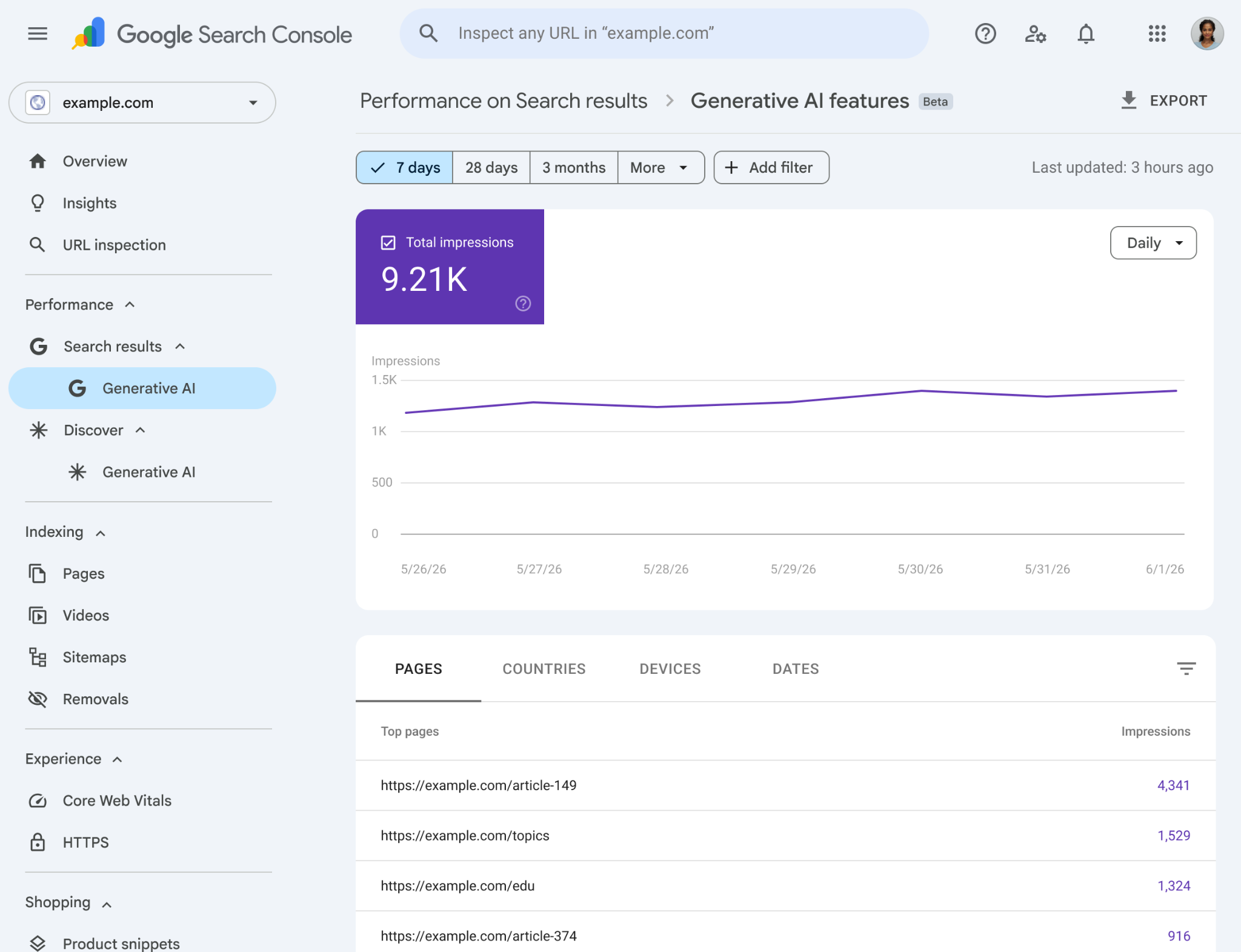
Search stopped being a simple list of links. AI Overviews and AI Mode can assemble an answer inside the result, which means more informational searches can end before the user reaches a website. That does not erase demand. It changes where the answer is delivered and when a click is still necessary.
In its 2026 zero-click analysis, iPullRank reported that 46.96% of Google searches in its dataset ended without a click. The study used a Datos panel covering 13.1 billion search events between October 2024 and December 2025. That is strong directional evidence, not a universal conversion rate for every market.
The Australian mobile cohort matters more for a local business than a global headline. In the same iPullRank analysis, 64% of Australian mobile searches ended without a click. The source is a single proprietary panel, so it should be treated as directional. Still, it fits what the search page now allows people to do: inspect a map result, read reviews, find a phone number or accept an AI summary without visiting a site.
Informational click-through has therefore become less dependable, especially when the question has a short, settled answer. If someone asks for a definition and the result supplies it, what unfinished job would force the visit? Often, there isn’t one.
This is why a fall in informational clicks does not prove that search stopped working. It proves that traffic was never the same thing as value. We simply got away with confusing the two for a long time.
What stopped working
The weakest version of SEO was already weak before AI search. It produced thin explainers, stretched one idea across several keyword variations and celebrated any ranking that moved upwards. AI made that model easier to see for what it was: volume without a commercial reason to exist.
Thin explainers are exposed first. If a page says what every other page says, an AI answer can compress the consensus without sending the reader anywhere. Rewriting the same definition at greater length does not make it more useful. It just gives the summary more words to ignore.
Keyword-stuffed volume has the same problem. Publishing fifty pages around tiny variations of a phrase may increase the number of ranking reports. It does not necessarily increase the number of people who need your business. A rank for a term with no commercial intent can be technically correct and financially irrelevant. That is an impressively tidy way to waste money.
The old plan also treated all clicks as equal. A visit from someone checking a broad definition counted beside a visit from someone comparing providers in their suburb. One is easy to satisfy in the result. The other may lead to a call, inspection, booking or quote. Putting both in the same traffic graph hides the difference that matters.
A content-first SEO approach still has a place, but only when content has a job beyond filling a keyword slot. The question for every proposed page is blunt: after the answer appears in search, why would the right person still need this page?
Before and after: the SEO that lost value versus the SEO that still earns it
What stopped working
- Thin definitions that repeat the accepted answer
- Keyword pages produced to hit a volume target
- Rankings for queries with no useful next step
- Traffic reports detached from leads, calls and revenue
- Owned content with no proof beyond its own claims
What still works
- Local visibility where the user must choose a provider
- Commercial pages that help people compare and act
- Proof that cannot be copied from a generic answer
- A sound technical base that search systems can access
- Consistent business facts backed by trusted sources elsewhere
What still works, and works harder
SEO still works hardest where the search result cannot finish the transaction. A map can suggest a plumber, lawyer or clinic. It cannot inspect the job, understand the full situation, issue a reliable quote or deliver the service. The closer the query sits to a real decision, the more useful visibility becomes.
Local pack visibility is part of SEO now, not an optional extra sitting beside it. For Australian mobile searches, the 64% directional zero-click figure means a business can earn attention without recording a website session. A complete business profile, relevant service information, strong reviews and accurate local details may influence the choice inside the result itself.
This is particularly important for trades and other local services. The website still provides depth and corroboration, while the map result carries the first decision. The practical implications are covered in more detail in how AI search impacts trades businesses.
Commercial and money pages also work harder. Service pages, pricing information, quote pages, booking paths, product comparisons and suburb-specific service pages give the visitor something the summary cannot complete. They turn interest into action. They should be more useful than a sales brochure, but they do not need to pretend they are neutral encyclopaedias.
Proof content has become more valuable for the same reason. Case studies, job galleries, first-hand explanations, verified reviews and clear before-and-after evidence contain details a generic answer cannot manufacture responsibly. They help the buyer verify that the business has done the work, not merely written about it.
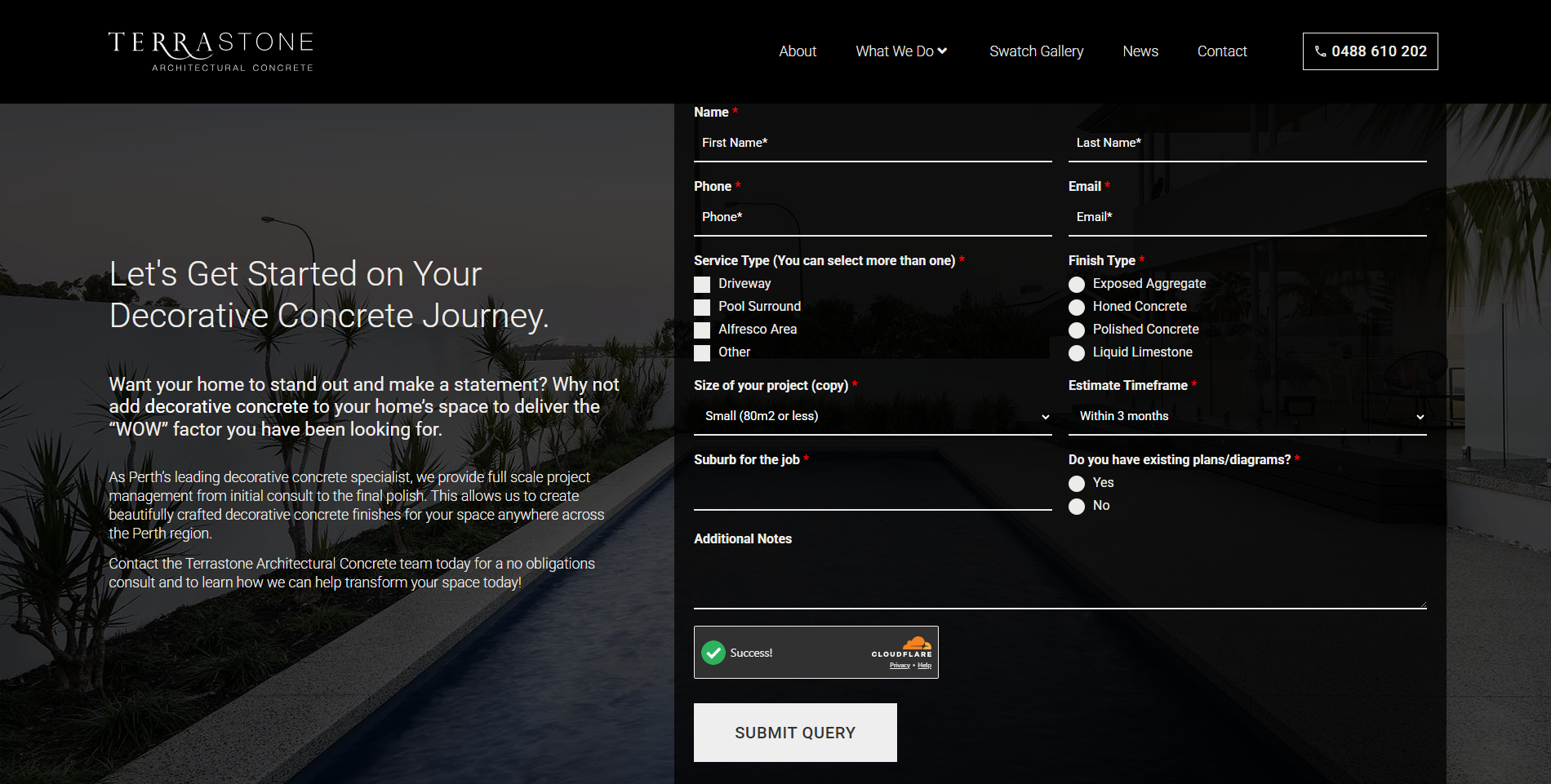
Terrastone is an architectural concrete specialist in Perth. OO has managed their digital marketing since 2018 with zero paid advertising spend across the entire eight-year engagement. Organic search accounts for 70% of sessions and 78% of conversions. By year five it was generating more enquiries than the business could service. The owner cancelled all remaining marketing channels. He is currently booked 8 to 10 weeks in advance and building toward a fourth team. The result holds because architectural concrete is not a transaction a search result can complete. The page surfaces the business. The service pages, galleries and reviews do the convincing. The enquiry is where the decision happens.
Underneath all of this sits the technical foundation. Search engines and AI systems cannot use pages they cannot reliably access, understand or connect. Indexation, crawl access, internal linking, page performance, structured business information and clean site architecture are not glamorous. Neither are foundations. Both become noticeable when missing.
Then there is entity authority: the consistency between what a business says about itself and what other trusted places say about it. Aleyda Solis analysed cited source domains for 15 leading brands across SaaS, ecommerce and finance. External domains accounted for 69.6% to 82.3% of the cited-source mix across those verticals and platforms.
Those percentages are directional, not fixed benchmarks. The sample was small, US-centric and based on one point-in-time dataset. The useful conclusion is narrower: your website is the factual base, but it cannot be the only place that confirms you exist, do the work and deserve belief.
The reframe: citation versus visit
A citation and a visit do different jobs. A page can be cited without receiving meaningful referral traffic. A pricing or booking page can produce a valuable visit without being quoted by an AI answer. Treating both outcomes as one visibility score creates the same mistake as treating every organic click as equal.
Aleyda Solis’s 2026 content-prioritisation framework separates click resilience, citation potential, brand mention potential, business value, proprietary advantage and expected effort. The framework came from an analysis of 40 leading sites across four verticals. It is a decision aid, not a fixed scoring law.
The split is useful because it forces a better question for each asset.
- Should this page earn a visit because the user must inspect, compare, verify or act?
- Should it earn a citation because it contains unique, documented information?
- Should another website, review platform, publisher or community corroborate the claim?
- Does any of that connect to a business outcome worth paying for?
Consider a detailed study. Its evidence may be quoted widely while few readers visit. Now consider a booking page. It may never become the sentence an AI assistant cites, yet every qualified visit can matter. Neither page failed. They had different jobs.
This is also why owned content alone is not an AI search strategy. Your site should hold accurate, accessible facts and original proof. External sources should validate, compare or discuss those facts. For a practical look at which assets deserve production, see what content still works in AI search.
How to tell if SEO is worth it for your business
SEO is worth funding when valuable demand already shows up in search and the customer still needs to choose, verify or act. It is less attractive when the query has no commercial next step, the value of a customer is too low to recover the work, or the business cannot provide a competitive answer.
Yes, if search sits close to a valuable decision
The case is strongest for local businesses, high-value services and considered purchases. A person choosing a builder, clinic, adviser, software platform or commercial supplier usually needs more than a summary. They need evidence, fit, location, availability, trust and a path forward.
SEO also makes sense when the business can publish something competitors cannot copy cheaply. Real work, specific expertise, proprietary information, live detail and a strong body of third-party validation make the result more defensible. The content does not have to be enormous. It has to be useful at the point of doubt.
No, if the economics or intent do not hold
Do not keep funding SEO from habit. If the target terms are almost entirely generic information, if the user can finish the task inside the answer, or if no sensible share of that demand could become revenue, another channel may deserve the next dollar.
The same applies if the offer is weak. SEO can reveal a business to more people. It cannot make slow response times, unclear pricing, poor reviews or a forgettable proposition convincing. More visibility for a weak choice is not growth. It is a larger audience seeing the problem.
There is another honest no: when the business needs results faster than the work can mature. Search is usually an asset-building decision, not an emergency tap. If cash flow depends on immediate demand, use a channel designed to buy attention now while deciding whether SEO deserves a longer runway.
Ask four questions before renewing the plan: Which searches are near money? What must the user still do after the AI answer? What proof can only we provide? How will we connect visibility to calls, leads, bookings or sales? If the answers are vague, the strategy probably is too.
Where to put the next dollar
Spend in sequence. Fix what blocks access first, build the pages closest to revenue second, add proof third, then make that evidence easier for search and AI systems to extract. Reversing the order produces beautifully formatted answers on pages that do not deserve attention.
1. Fix the technical leaks
Check whether important pages can be crawled, indexed, understood and reached through sensible internal links. Remove accidental duplication and dead ends. Make local and commercial pages easy to find. A technical repair is worthwhile when it clears a real blockage, not when it creates a thicker audit document.
2. Improve commercial and local pages
Put the strongest work into service, location, comparison, pricing, quote and booking pages. Answer the questions a serious buyer asks before acting. Show where you work, what is included, what changes the price, what happens next and why the evidence should be believed.
3. Publish proof
Add case studies, job detail, galleries, reviews and first-hand explanations. Specificity matters. “We get results” is a claim. A documented situation, method and verified outcome is proof. When the proof does not exist yet, collect it before producing another broad explainer.
4. Format for citation and corroboration
Use direct headings, concise answer passages, clear source labels and consistent facts. Then look beyond the site. Reviews, relevant publishers, industry directories and communities can corroborate what the owned page says. This guide to optimising your website for AI search covers the on-page side in more detail.
Measurement should follow the same sequence. Track whether priority pages are accessible, visible for relevant searches and producing the actions they were built to produce. Report local visibility and on-result actions alongside website visits. Track citations separately. A single organic traffic line cannot explain all three.
Frequently asked questions
Is SEO dead?
No. SEO still works, but generic informational SEO has lost much of its protection. Search now resolves more questions without a website visit. The durable work sits closer to local choice, commercial action, proof and trusted entity information. Judge it by business value, not by whether traffic returns to an older peak.
Should I stop paying my agency?
Do not stop because of a headline. Ask what the agency is prioritising and how that work connects to qualified demand. If the answer is mostly article volume, broad rankings and total traffic, challenge the plan. If it covers technical access, local and commercial pages, proof, third-party corroboration and meaningful actions, judge the evidence over an agreed period.
Will AI replace Google?
The available evidence does not support a clean replacement story. The iPullRank analysis described AI tools as destinations reached through Google as well as search alternatives. For a business, the safer plan is to build visibility across search results, AI answers, local surfaces and credible third-party sources rather than betting everything on one interface.
How fast does SEO work now?
There is no honest universal timeline. Speed depends on the site’s starting point, competition, technical condition, local market, authority and the work being funded. Technical fixes can remove blockers quickly. Competitive commercial visibility takes longer. Set milestones around completed fixes, indexation, relevant visibility and qualified actions instead of promising a date nobody can prove.
The question was never does SEO work. It is does yours.
SEO still works when it helps the right person choose, verify or act. It struggles when it produces information that a search result can summarise completely and the business measures success by the visit alone.
The sensible response is not to defend every old tactic. Cut the pages with no job. Strengthen the ones close to money. Publish proof worth finding. Make your facts clear enough to cite and credible enough for others to confirm.
The question was never does SEO work. It is does yours. If your reporting stopped showing traffic tomorrow, could you still point to where search creates trust, choice and revenue? If not, what will you change with the next dollar?
Sources
- iPullRank, Cate Dombrowski, What 13 Billion Google Searches Reveal About Zero-Click Behavior, retrieved 2026-08-11, https://ipullrank.com/zero-click-behavior-analysis-q3-2026.
- Aleyda Solis, AI Search Is a 3rd-Party Citation Problem With an On-Page Corroboration Base, retrieved 2026-08-11, https://www.aleydasolis.com/en/ai-search/ai-search-citations/.
- Aleyda Solis, Content Prioritization in an AI Search Era: A Framework + Worksheet, retrieved 2026-08-11, https://www.aleydasolis.com/en/ai-search/content-prioritization-ai-search/.